Not all roofs are created equal, and the material you choose affects everything from curb appeal to how well your home holds up in the next hailstorm. Here’s a quick breakdown of the most common residential roofing systems, what they cost you in lifespan, and how impact ratings factor into the decision.
The most basic and budget-friendly option. Flat, uniform, single-layer construction. Typical lifespan: 15–20 years. 3-tab shingles are lightweight and affordable, but they generally carry lower impact ratings and are more prone to wind and hail damage than heavier options, something worth weighing carefully given how often Central Texas sees severe hail.
The current standard for most residential replacements. These use multiple laminated layers to create a thicker, more dimensional look that mimics wood shake or slate. Typical lifespan: 25–30 years. The added thickness generally translates to better wind resistance and higher impact ratings than 3-tab shingles, and manufacturers now offer Class 4 impact-rated versions, like TAMKO’s HailGuard, built specifically for hail-prone regions like ours.
The premium tier of asphalt shingles, engineered to replicate the look of natural slate or cedar shake at a fraction of the weight and cost. Typical lifespan: 30–50 years, depending on the product line. Designer shingles are typically the thickest asphalt option available, which often earns them the strongest impact ratings in the shingle category, but they come at a higher price point.
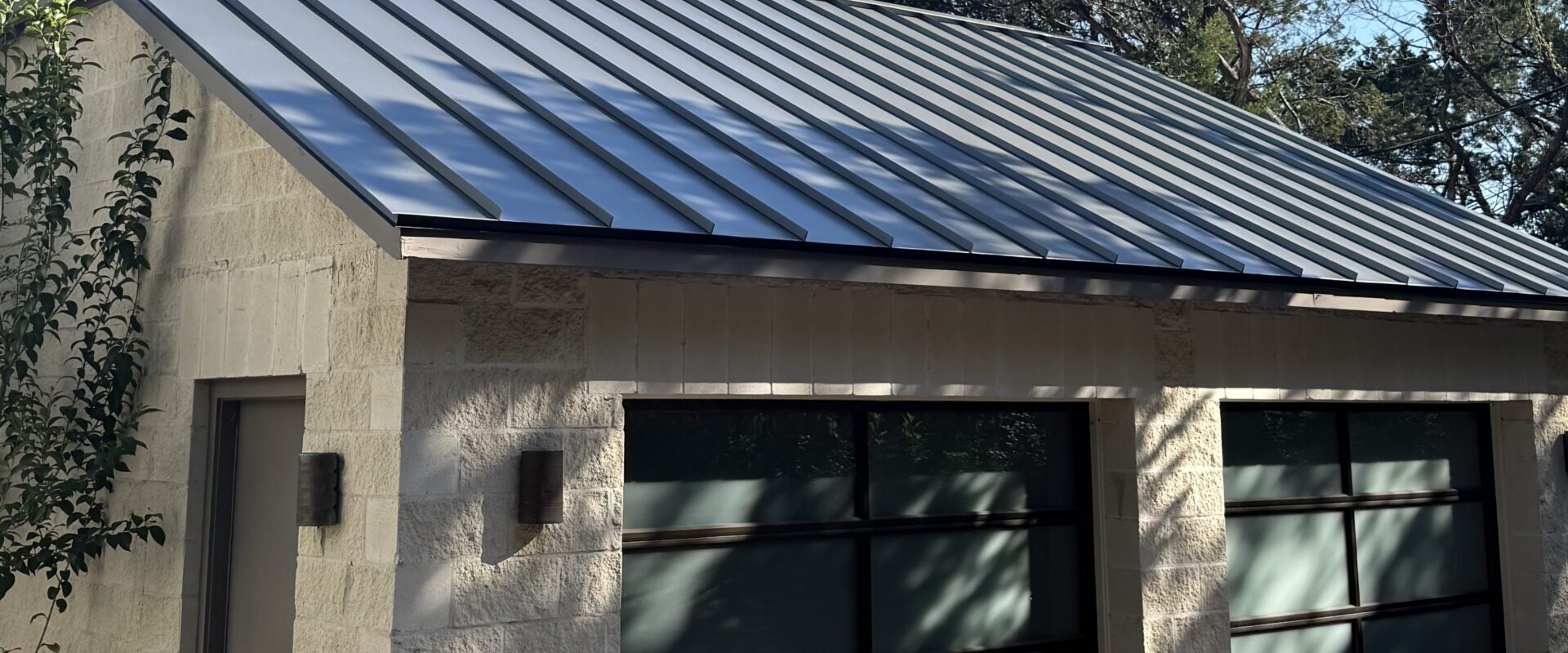
Standing seam or metal shingle systems offer the longest lifespan of any common residential option. Typical lifespan: 40–70 years. Metal is inherently strong against wind and hail, and many systems carry Class 4 impact ratings by default. It also reflects heat rather than absorbing it, which can help with cooling costs through Texas summers. The tradeoff is a higher upfront investment compared to asphalt.
Regardless of material, look for the UL 2218 impact rating, which runs Class 1 (least resistant) to Class 4 (most resistant to hail impact). A higher class doesn’t just mean fewer repairs: insurers in hail-heavy markets often offer premium discounts for Class 4 roofs, and some products, like HailGuard, back that rating with a warranty against hail damage specifically. We covered how these ratings actually work in more detail in a previous post.
Lifespan and impact resistance are only part of the equation. Budget, roof pitch, HOA restrictions, and the look you want for your home all play a role too. Generally speaking: 3-tab makes sense for tight budgets on shorter timelines, architectural shingles hit the best balance of cost and performance for most homeowners, designer shingles suit those prioritizing curb appeal and longevity, and metal is the long-game investment for homeowners planning to stay put.
Not sure which system fits your home and budget? Get in touch and we’ll walk you through your options.